
In summer 2024, a wildfire near Fort Nelson, British Columbia, burned through critical infrastructure. Internet, cell service, and landlines across the entire Yukon Territory went dark, all at once, for nearly 24 hours. Tens of thousands of residents had no way to call for help or check on family.
Ham radio operators were the only communications link. Using battery-powered HF radios, they relayed emergency messages, connected isolated communities, and kept information flowing when every commercial system had failed.
Shane Skarnulis, manager of response operations at the Yukon Emergency Measures Organization, later confirmed: ham radio operators were essential during the outage. That scenario, commercial infrastructure collapsing while amateur radio keeps working, repeats itself across Canada every wildfire season, every flood, every ice storm.
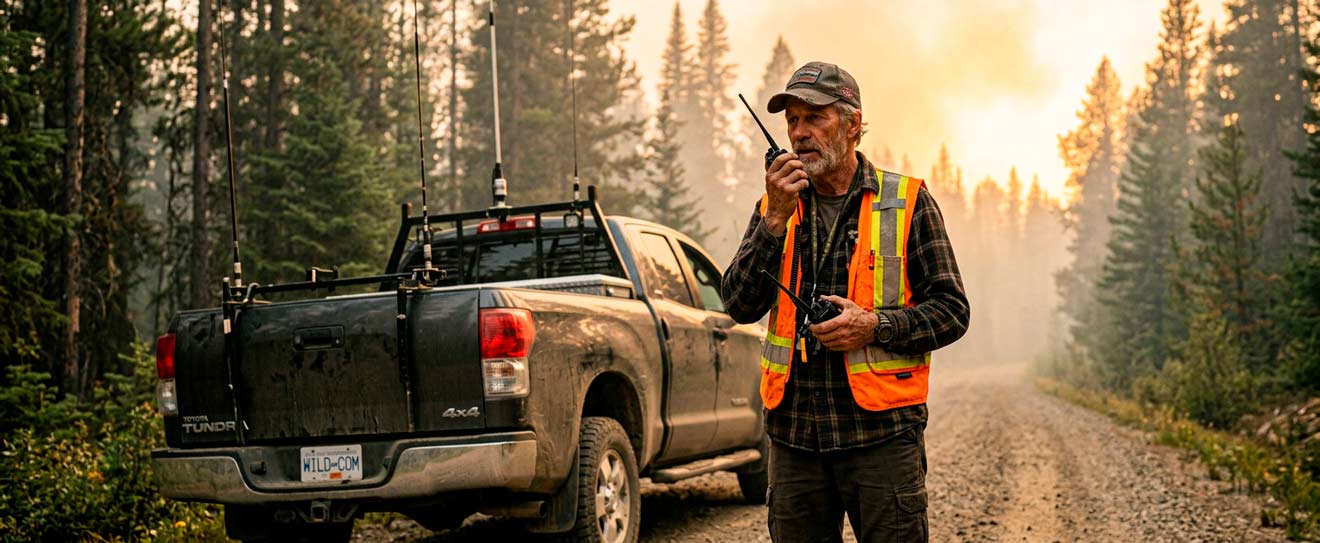
What is Emergency Radio Communication?
Emergency radio communication, sometimes called EmComm, refers to the use of amateur radio frequencies to pass messages when normal systems fail. Cell networks overload. Landlines go down. Internet connections vanish. Radio waves keep moving.
Why Radio When Everything Else Fails
Unlike commercial services, amateur radio doesn’t rely on centralized infrastructure. There are no cell towers to fail, no fiber-optic cables to sever. An operator with a handheld radio and a charged battery can transmit from a parking lot, a hilltop, or a shelter. The equipment runs on 12 volts – the same as a car battery.
~79,000
Licensed operators in Canada
761,155
Licensed operators in USA (FCC)
Organizations That Respond
In Canada, the RAC Auxiliary Communications Service (ACS) coordinates amateur radio volunteers for emergency response. In British Columbia, PERCS (Provincial Emergency Radio Communications Service) operates in partnership with Emergency Management and Climate Readiness (EMCR), linking volunteer operators with Provincial Emergency Operations Centres. Ontario announced $545,000 in funding for amateur radio emergency preparedness in 2024.
In the US, the Amateur Radio Emergency Service (ARES) trains volunteers to support local agencies. The UK has RAYNET, formed in 1953 after the North Sea flood killed over 2,500 people along the coast.
When It Mattered: Canadian Emergencies
“They wouldn’t have known that they needed helicopters to get people off the roofs. They wouldn’t have known the hospital was being flooded and needed to be evacuated. Without amateur radio, they would not have been able to tell what was going on in High River.”
— Kerry Atkinson, VE6GG, ARES Emergency Coordinator, Alberta Flood 2013
In June 2013, flooding in southern Alberta overwhelmed High River. Communication lines crashed. Emergency responders relied solely on amateur radio – volunteers worked 24-hour shifts for four consecutive days. In May 2016, the Fort McMurray wildfire forced the evacuation of 80,000 residents. PERCS went on standby to staff radio rooms and establish links into the evacuated city.
Tools & Calculators for Radio Operators
47%
of Canadian hams build their own antennas (RAC Survey 2021)
The 2021 RAC survey found that homebrewing and kit-building claimed 36% of respondents. The hobby’s DIY roots remain intact.
The J-Pole Antenna
The J-Pole is a popular design for VHF and UHF work – an end-fed half-wave antenna with a quarter-wave matching stub. No ground plane required. Dimensions depend on the target frequency, and getting them right matters. Incorrect lengths mean poor signal and wasted power. Calculators exist to derive the measurements from a given frequency in MHz.
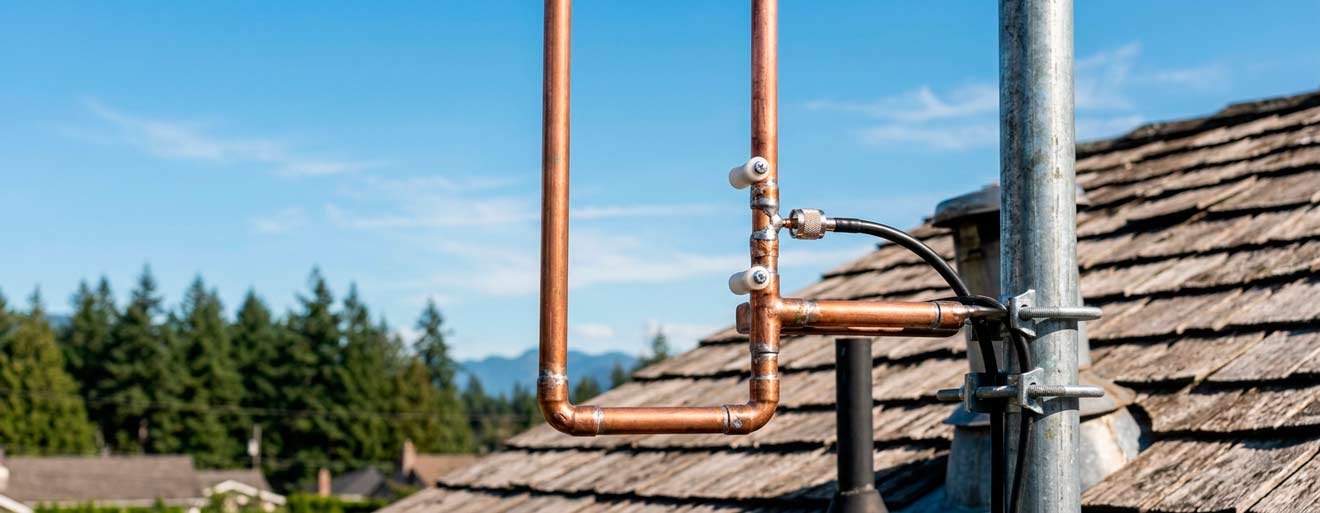
Antenna calculators, frequency reference tables, propagation prediction tools – these form the practical toolkit of the prepared operator. Worth learning before the emergency happens.
Digital Modes: Winlink, Winmor & Beyond
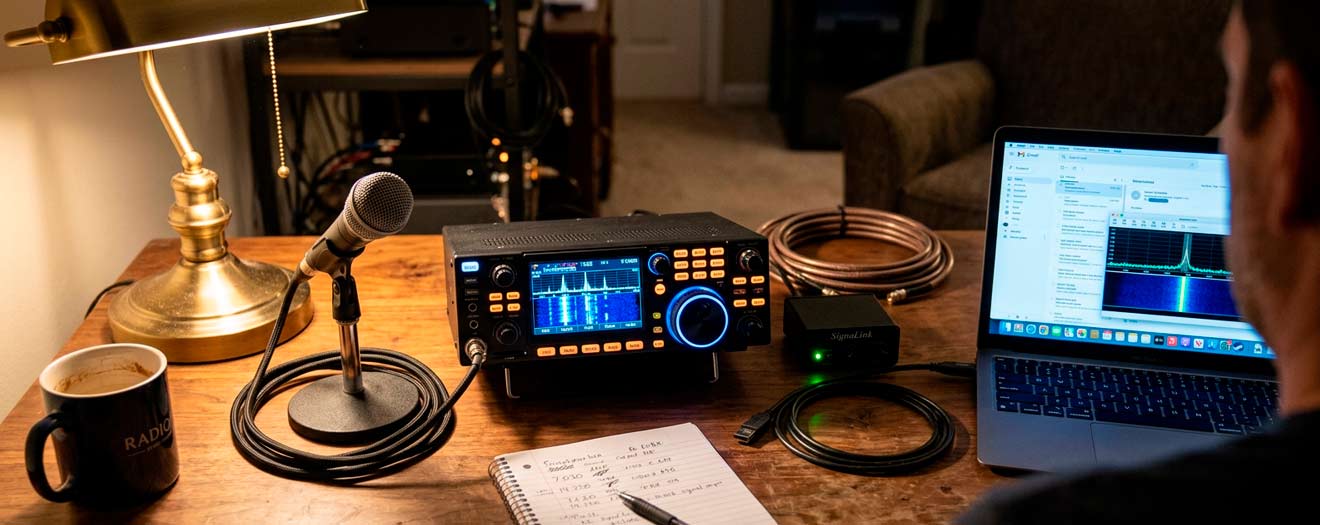
Email over radio exists. Winlink (formally, Winlink Global Radio Email) is a worldwide messaging system that connects amateur radio frequencies to the internet.
100,000+
Messages per month via Winlink
1,000+
Volunteer gateway stations worldwide
A Real Rescue: HMS Bounty, 2012
On October 29, 2012, the tall ship HMS Bounty was taking on water 90 miles off Cape Hatteras during Hurricane Sandy. The crew tried satellite phones. Nothing. They tried calling the Maritime Mobile Net on HF. Silence.
“As a last-ditch effort, we used Winlink to e-mail the Coast Guard for help. Within an hour, we heard a C-130 plane overhead.”
— Doug Faunt, N6TQS, ship’s electrician and survivor
Fourteen crew members were rescued from life rafts. Winmor was one of the digital protocols that made this possible – a software modem that encodes data for transmission over HF radio. VARA is a faster alternative now widely used across Canada and internationally.
Frequency References by Region
90%
of Canadian hams use 2-meter band (144–148 MHz) monthly
These VHF and UHF bands are where most local emergency nets operate – the regular practice sessions that keep operators sharp and test equipment before it’s needed. UHF at 430 MHz claimed 67% of respondents in the RAC survey.
HF frequencies, 80 meters through 10 meters, allow longer-range communication but require the Advanced qualification in Canada (or passing Basic with 80% honours plus any second qualification). During large-scale disasters, HF becomes the backbone for regional and national coordination.
In Canada, RAC publishes official band plans. The BC Amateur Radio Coordination Council (BCARCC) coordinates repeaters in British Columbia. PERCS holds a weekly HF net every Wednesday at 18:45 on 3.735 MHz LSB.
Frequently Asked Questions
ISED (Innovation, Science and Economic Development Canada) issues amateur radio certificates after passing an examination. The Basic qualification allows operation on VHF and UHF bands. Adding the Advanced qualification, or scoring 80% or higher on Basic (“with honours”) plus any second qualification, unlocks HF privileges. Examinations are administered by accredited volunteer examiners.
A handheld VHF/UHF transceiver costs between $30 and $300 CAD depending on features. Most operators eventually add a mobile or base station radio. The rabbit hole goes deep, but entry is cheap.
A net is an organized on-air meeting where a net control station manages traffic. Operators check in, pass messages, and practice procedures. During actual emergencies, the same structure handles real traffic – welfare inquiries, resource requests, damage reports. Regular practice nets run weekly in most areas across Canada.
Winlink sends email over radio frequencies when internet access is unavailable. The tradeoff: messages on amateur frequencies are not private. Anyone with the right equipment can read them. That’s by design and by law.
RepeaterBook maintains a searchable database covering North America. BCARCC publishes the official BC coordination list. PERCS provides regional frequency plans for emergency use. Local radio clubs often maintain their own repeaters.
The technology is decades old. The need isn’t going away. Wildfires, floods, and ice storms are increasing across Canada. Infrastructure ages. The amateur radio community continues to train, build, and stand ready – unpaid, largely unnoticed until the moment arrives when nothing else works.
External Resources
Radio Amateurs of Canada (RAC) | |
PERCS (BC Emergency Radio) | |
ISED Amateur Radio (Canada) | |
BC Repeater Coordination (BCARCC) | |
Winlink Global Radio Email | |
ARRL (American Radio Relay League) |
Coast Emergency Communications Association
The Coast Emergency Communications Association (CECA) is a volunteer amateur radio group based in Nanaimo, British Columbia. CECA is a registered non-profit under the BC Societies Act and a registered charity with the Canada Revenue Agency.
The organization works with the City of Nanaimo and the Regional District of Nanaimo emergency programs, providing backup radio communications in the event of a disaster when conventional communications systems fail. Their service area covers south Nanaimo to Lantzville, BC.
This website is operated independently and is not affiliated with CECA.